Friday, April 17, 2015
FREE MOBILE UNLOCKING SERVICE: Why You Should Get A FREE Mobile Unlock Code !!!
FREE MOBILE UNLOCKING SERVICE: Why You Should Get A FREE Mobile Unlock Code !!!: 1. Unlocking Your Mobile Phone Increase the Value ( Price ) 2. An Unlock Mobile Phone Gives You The Ability To Switch Phone Carrier With-O...

Wednesday, July 9, 2014
Boost Metabolism and Prevent Middle-Age Weight Gain
Source: WebMD archive
By Sari Harrar
You diet more than ever, but don’t weigh less. Exercise regularly, but still feel flabby. And your once perfectly fitting clothes now seem snug.
By Sari Harrar
You diet more than ever, but don’t weigh less. Exercise regularly, but still feel flabby. And your once perfectly fitting clothes now seem snug.
If you’re nodding your head in agreement, chances are you’re in the over-35
club. Like most members, you probably have a stay-slim formula (something like
regular walks plus no ice cream at night) that no longer seems to be
working.
“If you never had problems losing or maintaining your weight in your 20s or
even in your early 30s, you may not be ready for what happens next,” warns
Madelyn H. Fernstrom, Ph.D., director of the Weight Management Center at the
University of Pittsburgh Medical Center. “Your metabolism slows by 5 percent
each decade. Compared to age 25, you’ll burn about 100 fewer calories a day at
35 and 200 fewer at 45. Do nothing, and you could gain eight to 12 pounds a
year.”
With age, muscle mass diminishes and so does your metabolic rate (the number
of calories your body burns throughout the day, whether you’re sleeping,
sitting, or sprinting to catch a bus). Making matters worse, many women
unwittingly sabotage their calorie-burning potential with crash diets,
ineffective exercise strategies, and other metabolism-busting habits.
Don’t fret yet. Although there are no magic bullets, there’s plenty you can
do to boost the number of calories your body burns every day and thus maintain
or even lose weight. Here, the six biggest mistakes you can make — and the
research-proven metabolism fixes.
Mistake: Relying on Just Your Scale
The basic ones, which only calculate pounds, can’t tell you what percentage
of your body weight is lean, calorie-burning muscle and how much is puffy,
sluggish fat. “Even a woman whose weight is in the normal range can have a high
percentage of body fat and a low percentage of muscle,” Fernstrom says. “And
the less muscle you have, the fewer calories you’ll burn.”
The metabolic difference between a pound of muscle and a pound of fat is
dramatic: Muscle burns at least three times more calories. “A woman
who weighs 130 pounds and has a healthy 25 percent body fat will burn about 200
more calories per day than a 130-pound woman with about 40 percent body fat — a
typical level for women at midlife,” says David C. Nieman, Dr.P.H., director of
the Human Performance Laboratory at Appalachian State University in Boone, NC.
“If the woman with more body fat doesn’t start modifying her diet or increase
her exercise, she could start putting on weight really fast.”
The Fix: Get an Expert to Weigh In
Visit your local gym (or a fitness center affiliated with a hospital) and
ask for a body-fat reading. “Find out whether the person who measures you has
been trained,” advises Fernstrom. People who have been certified by the
American College of Sports Medicine or who are exercise physiologists should
have training in body-fat analysis. A good way to check their accuracy: “At
your first visit, get two measurements within minutes of each other by the same
person to see how much variation there is. A little, like 2 to 3 percent, is
OK,” says Fernstrom. To track your progress, get rechecked roughly every three
months.
You can eyeball your fat level at home, too. “If you’ve got a poochy tummy
or can pinch an inch or more of fat at your waistline or upper arm, you’re
probably carrying more body fat than you should,” Fernstrom notes.
“Anything over 30 percent should be a wake-up call to make some real
changes,” she adds.
Mistake: Crash Dieting
When you slash too many calories, you send your body into starvation mode.
“A flat-out fast will drop the average woman’s metabolic rate by at least 25
percent,” says Nieman. “If you’re on a very-low-cal regimen, in the 400- to
800-calorie range, it falls by 15 to 20 percent.” Eating fewer than 900
calories a day also prompts your body to burn desirable muscle tissue as well
as fat, which slows your metabolic rate even more.
The Fix: Shed Pounds S-L-O-W-L-Y
“If you stay within the 1,200- to 1,500-calorie range, you can still slim
down — and you’ll lower your metabolic rate only by about 5 percent,” explains
Nieman. “What’s more, about 90 percent of the weight you lose will be fat.”
Regardless of which type of diet plan you choose, be sure to include lots of
lean protein, such as chicken, fish, or lean beef. “Protein contains leucine,
an amino acid that seems to protect you from muscle loss during a diet,” says
Stuart M. Phillips, Ph.D., associate professor of kinesiology at McMaster
University in Hamilton, Ontario. Skim milk can help even more: Phillips and his
team tracked 56 men who pumped iron five days a week for three months and found
that those who downed two cups of fat-free milk soon after their workout built
more muscle — and lost more flab — than those who drank soy milk or a
flavored-carbohydrate drink. “We have evidence that the benefit is very similar
for women,” Phillips notes. “They don’t put on as much muscle as men, but they
lose more fat.”
Mistake: Only Doing Cardio
If you never challenge your muscles with strength-training moves, you’ll
lose up to five pounds of muscle each decade, reports Wayne L. Westcott, Ph.D.,
fitness research director at the South Shore YMCA in Quincy, MA. Cardiovascular
exercise (like walking, biking, swimming, or sweating through an aerobics
class) is great for your health, but it isn’t strenuous enough to build or even
preserve much muscle mass. “Only strength training creates the microscopic
tears that prompt muscles to rebuild themselves,” explains Phillips. “Lifting
weights promotes a continual remodeling of muscle tissue. The process burns a
lot of calories.”
The Fix: Pump Iron
When women at the South Shore YMCA strength trained for 20 minutes twice a
week for 10 weeks, they added 2.6 pounds of calorie-hungry lean muscle and lost
4.6 pounds of body fat, which other research shows is likely to boost metabolic
rate by 7 percent, notes Westcott.
You should aim for about 40 to 60 minutes of strength training a week. Use
the weight room at your local gym, or exercise with dumbbells or resistance
bands at home. If you’ve never pumped iron before, sign up for a few sessions
with a personal trainer. That way, you’ll learn how to get the most out of each
move — without risking injury. And once you’ve been at it for a while, you’ll
need to increase the weight or resistance you’re using. “Often, women don’t
push themselves hard enough because they’re afraid they’ll bulk up with heavier
weights,” notes Fernstrom. “But that kind of muscle gain is unlikely because
females don’t have enough testosterone in their bodies to make muscles like men
do.”
Mistake: Sticking to the Same Exercises
If you always walk the same route, swim laps at one speed, or even have a
single strength-training routine, your muscles adapt and become so efficient
that they burn fewer calories while you work out, says Fernstrom. How to tell
when it’s time for a change? If any of the following is true: You’re not
sweating as much at the end of your routine; you don’t feel that tired after
working out; or you’re gaining weight even though you aren’t eating more or
exercising less.
The Fix: Switch It Up
Give your metabolic rate a big boost by adding a few short, fast-paced
bursts of speed to your regular walking, biking, swimming, or other aerobic
routine. Researchers at the University of Guelph in Ontario found that women
who did interval workouts on stationary bikes for two weeks burned 36 percent
more fat when they completed a continuous ride afterward. The reason: “More
muscle fibers got worked during those high-intensity intervals,” says Martin
Gibala, Ph.D., an exercise physiologist at McMaster University. “When you push
hard in short bursts, it reactivates nerve fibers, builds new capillaries, and
forces your body to repair the muscle. All of that burns a tremendous amount of
calories — long after you’ve completed your session.
The best news: “You don’t have to be an elite athlete to get the benefits of
intervals,” explains Gibala. “If you’re a walker, pick up the pace for 20 or 30
seconds, then slow down to your usual pace for a minute or two. Then do it
again. Start small, with one, two, or three intervals in your walk. As you grow
stronger, add more intervals, and make them longer and more intense.”
Mistake: Eating Lightly (or Not At All) Before Noon
“Women often have one of two problems with breakfast,” says Elisabetta
Politi, R.D., nutrition director of the Duke Diet & Fitness Center in
Durham, NC. “If they overindulge at night, they don’t have much appetite in the
morning. Or they’re trying to cut calories early in the day, so they don’t eat
enough in the A.M.” Breakfast skimpers and skippers, plus women whose diet
resolve is strongest in the morning (“Just coffee and dry toast, please”),
commit the same metabolic faux pas: eating too little to flip on their
metabolism as well as vital “satisfaction switches” in the brain that register
fullness in the stomach.
The Fix: Munch on More Food in the Morning
When researchers at the University of Texas at El Paso analyzed the food
diaries of 867 women and men, they discovered a metabolic window of opportunity
for appetite control: a hearty breakfast. Study volunteers who ate a bigger
meal in the morning went on to eat 100 to 200 fewer calories later in the day.
Research from Michigan State University that tracked 4,218 people showed that
women who skipped breakfast were 30 percent more likely to be overweight. The
best A.M. filler-uppers: oatmeal, eggs, peanut butter — or “anything with fiber
and protein,” says Politi.
Mistake: Living a High-Stress, Low-Sleep Life
When things get extra-hectic, your levels of cortisol, a stress hormone,
shoot up. And that can trigger cravings for high-fat, high-carb foods, report
University of California, San Francisco, researchers. The worst part: Your body
also sends that extra fat to your waistline. Millions of years ago, this
metabolic trick might have helped cavewomen refuel after fending off marauding
mastodons. But if you’ve got 21st-century chronic stress (Job! Kids! House!
Marriage!), all that extra cortisol could land you in perpetual “pass the
Twinkies” mode.
Sleep deprivation wreaks havoc on your waistline, too. When Harvard Medical
School scientists followed 68,183 women for 16 years, they found that those
averaging five hours of shut-eye per night were 32 percent more likely to gain
33 pounds than those who got seven hours a night. Those logging an average of
six hours per night were 12 percent more likely. What gives? Sleep deprivation
increases the appetite-stimulating hormone, ghrelin, and decreases the
satisfaction hormone, leptin, say researchers from the University of Chicago.
In a study they conducted, tired volunteers craved more candy, cookies, chips,
and pasta.
The Fix: Sleep More, Stress Less
Aim for at least seven hours of slumber most nights. Women who snoozed for
that long, or longer, had a lower risk of weight problems, the Harvard
researchers found. And try meditation — it could keep you in your skinny jeans.
A Canadian study of 90 meditators found that those who practiced in a group
setting for 1 1/2 hours a week for seven weeks and fit in additional time at
home had less stress and anxiety than non-meditators. Or tie on your sneakers
and go for a walk in the park or the woods: In a British study, 71 percent of
people who walked in the countryside felt less tense afterward. Other research
on the health benefits of nature backs this up: A Dutch overview confirmed that
just looking at greenery can improve well-being.
Originally published on: February 28, 2008
Thursday, July 19, 2012
Awesome Abs Without Crunches
By Lucy Danziger and the staff at SELF
Jul 19, 2012
Tight-in-the-abs and easy-on-the-eyes Joshua Lipsey, a fitness pro from Toronto who created the tummy-honing program TransCoremation ($150; C2CoreConcepts.com). The brilliance of his belly buffers: Unlike classic crunches, which target only the rectus abdominis (running from the center of your chest to your pubic bone), these moves work the transversus abdominis (deeper muscles that wrap around your trunk) as well as the obliques along your sides. Translation: a tinier waist, a flatter middle and sexy definition —fast!
Your plan Add five ab-firming minutes a day to your workout, doing any combo of the six moves here. Or if you’re in the mood for a flat-ab-athon, try this entire lineup.

WORKS TRANSVERSUS AND RECTUS ABDOMINIS
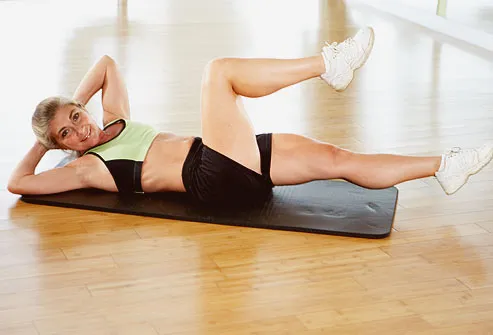
Lie faceup, hands behind head, elbows out, legs together with knees bent, shins parallel to ground. Engage abs, lifting upper body and reaching elbows to knees. Hold crunch as you straighten legs, lifting right leg high and lowering left leg to a 45-degree angle. Extend arms (as shown) and hold for 1 beat. Return to start. Repeat, reversing legs, for 1 rep. Do 10 reps.

WORKS TRANSVERSUS AND RECTUS ABDOMINIS, OBLIQUES
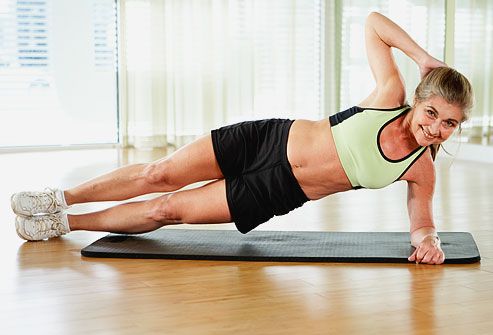
Lie on right side, right forearm propping up upper body, left arm raised and legs splayed wide with right leg in front (as shown). Engage abs to lift torso, keeping weight on right hip, and reach right hand to tap between shins. Return to start. Scissor legs so left is in front of right, and tap again for 1 rep. Do 15 reps. Switch sides; repeat.

WORKS TRANSVERSUS AND RECTUS ABDOMINIS, OBLIQUES
Sit with feet planted, right hand on ground about a foot behind right hip, left hand on head, elbow out; lift hips. Hold tabletop pose as you bend torso and raise right knee to touch left elbow over midsection (as shown). Do 12 reps. Switch sides; repeat.

WORKS TRANSVERSUS AND RECTUS ABDOMINIS, OBLIQUES
Lie faceup, arms overhead on ground. Engage abs as you sit up, bending knees and twisting torso to right as you extend arms past knees (as shown). Return to start. Repeat on opposite side for 1 rep. Do 20 reps.

WORKS OBLIQUES
Kneel on right knee with arms overhead and leaning toward left, left leg extended out to side, foot on ground (as shown). Shift to right, placing right hand on ground to support upper body, as you raise left leg level with hip, foot flexed. Return to start. Do 15 reps. Switch sides; repeat.

WORKS TRANSVERSUS AND RECTUS ABDOMINIS, OBLIQUES
Start in plank position on forearms, palms down, feet together. Flip right palm up as you move right forearm forward a few inches; repeat on left (as shown). Reverse movement: Move left forearm back as you flip palm down; repeat on right to return to start for 1 rep. Do 15 reps.
Jul 19, 2012
Tight-in-the-abs and easy-on-the-eyes Joshua Lipsey, a fitness pro from Toronto who created the tummy-honing program TransCoremation ($150; C2CoreConcepts.com). The brilliance of his belly buffers: Unlike classic crunches, which target only the rectus abdominis (running from the center of your chest to your pubic bone), these moves work the transversus abdominis (deeper muscles that wrap around your trunk) as well as the obliques along your sides. Translation: a tinier waist, a flatter middle and sexy definition —fast!
Your plan Add five ab-firming minutes a day to your workout, doing any combo of the six moves here. Or if you’re in the mood for a flat-ab-athon, try this entire lineup.
1. Swizzle Reach
WORKS TRANSVERSUS AND RECTUS ABDOMINIS
Lie faceup, hands behind head, elbows out, legs together with knees bent, shins parallel to ground. Engage abs, lifting upper body and reaching elbows to knees. Hold crunch as you straighten legs, lifting right leg high and lowering left leg to a 45-degree angle. Extend arms (as shown) and hold for 1 beat. Return to start. Repeat, reversing legs, for 1 rep. Do 10 reps.
2. Scissor Tap
WORKS TRANSVERSUS AND RECTUS ABDOMINIS, OBLIQUES
Lie on right side, right forearm propping up upper body, left arm raised and legs splayed wide with right leg in front (as shown). Engage abs to lift torso, keeping weight on right hip, and reach right hand to tap between shins. Return to start. Scissor legs so left is in front of right, and tap again for 1 rep. Do 15 reps. Switch sides; repeat.
3. Twist and Tighten
WORKS TRANSVERSUS AND RECTUS ABDOMINIS, OBLIQUES
Sit with feet planted, right hand on ground about a foot behind right hip, left hand on head, elbow out; lift hips. Hold tabletop pose as you bend torso and raise right knee to touch left elbow over midsection (as shown). Do 12 reps. Switch sides; repeat.
4. Super Cinching Sit-Up
WORKS TRANSVERSUS AND RECTUS ABDOMINIS, OBLIQUES
Lie faceup, arms overhead on ground. Engage abs as you sit up, bending knees and twisting torso to right as you extend arms past knees (as shown). Return to start. Repeat on opposite side for 1 rep. Do 20 reps.
5. Side Slim-Down
WORKS OBLIQUES
Kneel on right knee with arms overhead and leaning toward left, left leg extended out to side, foot on ground (as shown). Shift to right, placing right hand on ground to support upper body, as you raise left leg level with hip, foot flexed. Return to start. Do 15 reps. Switch sides; repeat.
6. Beggar’s Plank
WORKS TRANSVERSUS AND RECTUS ABDOMINIS, OBLIQUES
Start in plank position on forearms, palms down, feet together. Flip right palm up as you move right forearm forward a few inches; repeat on left (as shown). Reverse movement: Move left forearm back as you flip palm down; repeat on right to return to start for 1 rep. Do 15 reps.
Thursday, July 5, 2012
Wednesday, July 4, 2012
The 30-Minute Workout Routine Slideshow
The 30–Minute Fitness Blitz
Think you don't have time to work out? You do. It's the intensity of your workout that's key. A short–burst, high–intensity workout boosts your metabolism and tones muscles. Get moving with this 30–minute "quickie" routine that includes cardio training and resistance training for each major muscle group.If you're new to exercise, over 40, have a health problem, or take regular medication, check with your doctor before starting a fitness program.
Side Plank: for Core or Abdominals
For another abdominal alternative, lie on your side with a bent elbow directly under your shoulder, and use your torso muscles to lift the body up into a side plank, see above. Then lift the hips higher, then back to the plank, then lower. Do as many as you can with proper form, then repeat on the other side.Have You Completed 20 Minutes?
Before moving on to the cardio portion of the workout, be sure you've completed 20 minutes of resistance training. If you have, now's a good time for a water break to keep your muscles well-hydrated. If you haven't, go back and start the circuit over again until you reach the 20 minute goal.Cardiovascular Training
Vary the intensity during your cardio workout. Use intense intervals, taking about a minute to get from moderate speed to intense. Whether you're on the stair-stepper, the elliptical trainer, or the treadmill, do:- 30 seconds of the highest speed you can tolerate, then 30 seconds of normal speed.
- Then 30 seconds of the stiffest resistance you can handle, then 30 seconds of normal.
Frequency of Workout
Perform this 30-minute workout routine every other day, or do it two days in a row if that better suits your schedule. These are not hardcore bodybuilding-style routines where the high degree of muscular overload requires full rest to recover. For a healthy body, work out regularly and eat a healthy diet.
26 Foods That Fight Fat
Need an easy weight loss boost?
These food superstars may help you
whittle away those stubborn extra pounds.
Greek Yogurt
What makes Greek yogurt a delicious tool for weight loss is its protein content. It has twice as much as other yogurts. "Protein takes longer to leave the stomach," says sports nutritionist Leslie Bonci, MPH, RD. "That keeps you satisfied longer." As a bonus, Bonci tells WebMD, the body burns more calories digesting protein than carbs. Non-fat, low-fat, and low-sugar types keep a slim profile.
Quinoa
Quinoa (pronounced keen-wa) is a nutritional all-star that belongs in your weight loss plan. This whole grain has 8 grams of hunger-busting protein and 5 grams of fiber in one cup, plus it's as easy to cook as rice. It's also packed with nutrients such as iron, zinc, selenium, and vitamin E. For a quick and interesting dinner, mix in some vegetables, nuts, or lean protein.
Cinnamon
Studies suggest cinnamon may have a stabilizing effect on blood sugar levels. This could curtail appetite, particularly in people with type 2 diabetes, Bonci says. Nearly everyone can benefit from cinnamon in its traditional role. Stir some into your coffee, tea, or yogurt to add sweetness without adding calories.
Hot Peppers
Hot peppers contain a flavorless compound called capsaicin. It's more plentiful in spicy habaneros, but also occurs in jalapeños. This compound appears to curb appetite and speed up the metabolism slightly, but only for a short time. Bonci doubts that this has a significant impact on weight loss. But, she says, people tend to eat less when their food is spicy.

Green Tea
Several studies suggest green tea may promote weight loss by stimulating the body to burn abdominal fat. Green tea contains catechins, a type of phytochemical that may briefly affect the metabolism. To get the most benefit, you may need to drink green tea several times a day. Bonci recommends taking your tea hot, because it takes longer to drink, slowing your calorie intake and providing a soothing, mindful experience.

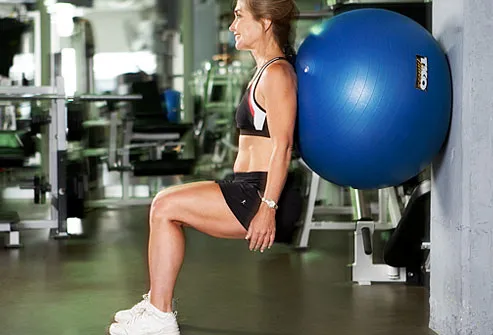

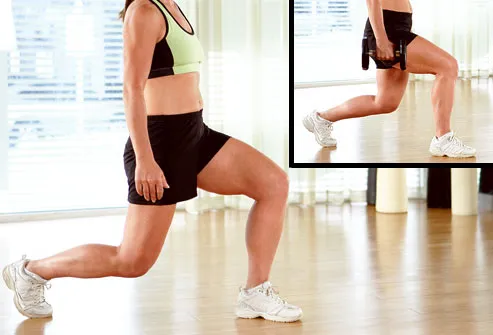
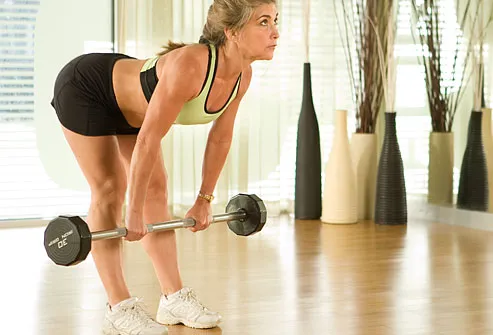
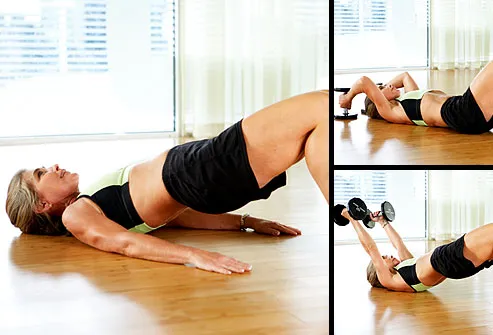
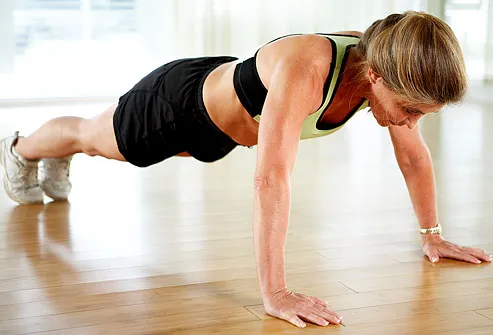
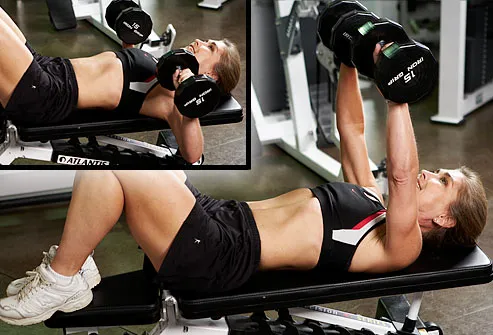
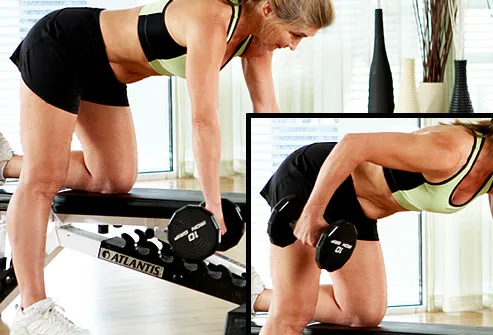
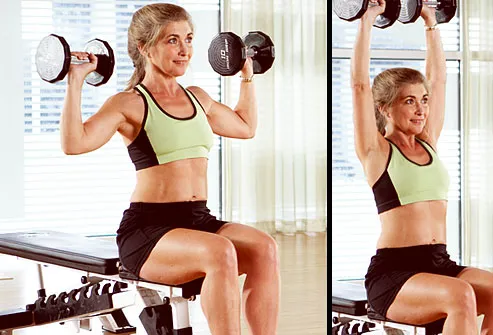





Whipped to Ripped: Amazing Transformations
In honor of Taylor Lautner's amazing 30-pound weight gain to portray New Moon's werewolf Jacob Black, we've corralled the top big-screen stars who went from whipped to ripped--abs, biceps and bods, that is. Click on to check out the results of our recent survey on who tops the list.
Want To Get Lean Naturally and Stay Healthy?
Here are natural supplements that I highly recommend:
 Two ancient herbs: golden chia from the West and ginseng from the East,
combine to create a modern miracle – Forever Gin-Chia. Let this powerful
combination of herbs give your body back what your busy lifestyle takes
out!
Golden Chia, or North American Sage, was used by southwest Native American Indians in the US at the turn of the century for its life-sustaining properties. Chia possesses the highest percentage of the polyunsaturated fatty acids, a-linolenic and linoleic (i.e. 83.2%), of all crops. It is a great source of Omega-3 fatty acids, natural antioxidants and dietetic fiber. The protein content of Chia is higher than other nutritional grains. Compare Chia’s 19-23% protein to wheat (14%), corn (14%), rice (8.5%), oats (15.3%), and barley (9.2%). And unlike these other grains, it is a complete protein - meaning that it has the appropriate balance of all essential amino acids. It is a powerful antioxidant!
Ginseng is legendary as a tonic, earning its name as the “King of Tonics.” It contains eleven saponins, making ginseng an adaptogen (a compound that adapts its effects depending on the needs of the body). Ginseng is also a potent antioxidant.
Together these powerful herbs contain vitamins A, B1, B2, C and D, plus thiamine, riboflavin, calcium, iron, sodium, potassium, capsicum, zinc, copper, magnesium and manganese. Combined, they can act to increase stamina and endurance, and support healthy circulation.
• Powerful antioxidant
• Good source of protein
• Can help increase stamina and endurance
FOREVER LEAN
 Forever Lean™ provides two revolutionary ingredients that can help
reduce the body’s absorption of calories from fat and carbohydrates. The
first of these ingredients is a unique, fatabsorbing fiber derived from
the cactus plant, Opuntia ficus-indica, otherwise known as Indian fig,
nopal or prickly pear. Studies have shown that this unique fiber has a
very high ability tobind fats, compared to other types of plants. The
other unique ingredient in Forever Lean is a protein specially derived
from the beans of the Phaseolus vulgaris plant, otherwise know as white
kidney beans. This protein works by slowing the body’s absorption of
sugar in the small intestine by temporarily inhibiting the enzyme
activity that converts starches into sugar. Together these two
revolutionary new ingredients can help you succeed in your quest to
reach your ideal weight by helping to block the absorption of some of
the fat and carb calories you ingest. The third most effective
ingredient in Forever Lean is Chromium Trichloride. Chromium is a very
important trace mineral which helps the body’s natural ability to
regulate blood sugar by acting as a GTF (glucose tolerance factor)
cofactor. This is especially important for normal metabolism. To
maximize the effectiveness of this supplement, however, it is important
to remember that youshould also incorporate a healthy diet and regular
exercise into your overall weight control regimen in order to achieve
and maintain your weight goal.
• Helps support healthy circulation
 Forever Garcinia Plus is a revolutionary nutritional supplement,
containing a number of ingredients that may aid in weight loss. The
primary ingredient is a natural substance derived from the fruit of a
Southern Asian tree, the Garcinia Cambogia, also known as the Malabar
Tamarind. The rind of this fruit is dried and used to produce
Hydroxycitric Acid (HCA). Chemically, HCA is very similar to the citric
acid found in oranges and other citrus fruits. The fruit of the Garcinia
is about the size of an orange, but is more like a pumpkin in
appearance. For centuries, this fruit has been used for culinary and
herbal purposes in Southern India and in Thailand.
Specialists in plant compounds became aware of the remarkable qualities of HCA in the late 1960s, when they learned that this compound can reduce the body’s production of fats from carbohydrates. During the normal metabolism of a meal, carbohydrate calories that are not used immediately for energy or stored as glycogen are converted into fats in the liver. HCA works by inhibiting the enzyme (citrate liase) which converts these calories into fat. As a result, the body will burn existing fat stores, thus aiding in weight loss.
When enough glycogen has been created and stored in the liver, a message is sent to the brain indicating sufficient food has been taken. This action is called a satiety reflex, and quells the appetite, reducing the desire for more food.
• Contains HCA, a natural appetite suppressant
• HCA inhibits the enzyme that converts calories into fat
• A useful tool in weight management
 For a meal on the go, whether you’re looking to lose weight, gain muscle
or just need an energetic boost, reach for Forever Lite Nutritional
Diet Program. Mixed with milk or your favorite fruit juice, Forever Lite
delivers a nutritious kick of vitamins, minerals, proteins and
carbohydrates. Rich in proteins for bodybuilding, growth and repair,
two shakes a day provide 100% of the RDI of vitamins and minerals. Each
shake contains 18 amino acids (including all 8 essential ones) and trace
elements including iron, selenium, chromium and iodine, providing you
with soluble and insoluble fiber. To protect against free radicals,
we’ve added antioxidant Beta Carotene and vitamins A and E, and used the
natural fruit sugar fructose, instead of sugar or aspartame.
Forever Lite is available in vanilla flavor. Mixed with low-fat milk, soy milk or fruit juice, a Forever Lite shake can be a healthy, tasty way to manage your weight. If used as a meal replacement, eat at least one nutritiously complete, low-calorie meal a day, including fresh fruit, vegetables, whole grains and lean protein.
• Two shakes provide 100% RDI of the vitamins and minerals stated
• Healthy snack or meal replacement
• Provides the perfect balance of protein and carbohydrates
• Approximately 21 servings per can
• No added preservatives
For more product info and for ordering online please click on the link below:
https://www.foreverliving.com/marketing/joinnow/applicationForm.do?action=display&store=PHL&distribID=630700054237&langID=enPhp
GIN-CHIA
Golden Chia, or North American Sage, was used by southwest Native American Indians in the US at the turn of the century for its life-sustaining properties. Chia possesses the highest percentage of the polyunsaturated fatty acids, a-linolenic and linoleic (i.e. 83.2%), of all crops. It is a great source of Omega-3 fatty acids, natural antioxidants and dietetic fiber. The protein content of Chia is higher than other nutritional grains. Compare Chia’s 19-23% protein to wheat (14%), corn (14%), rice (8.5%), oats (15.3%), and barley (9.2%). And unlike these other grains, it is a complete protein - meaning that it has the appropriate balance of all essential amino acids. It is a powerful antioxidant!
Ginseng is legendary as a tonic, earning its name as the “King of Tonics.” It contains eleven saponins, making ginseng an adaptogen (a compound that adapts its effects depending on the needs of the body). Ginseng is also a potent antioxidant.
Together these powerful herbs contain vitamins A, B1, B2, C and D, plus thiamine, riboflavin, calcium, iron, sodium, potassium, capsicum, zinc, copper, magnesium and manganese. Combined, they can act to increase stamina and endurance, and support healthy circulation.
• Powerful antioxidant
• Good source of protein
• Can help increase stamina and endurance
FOREVER LEAN
• Helps support healthy circulation
GARCINIA PLUS
Specialists in plant compounds became aware of the remarkable qualities of HCA in the late 1960s, when they learned that this compound can reduce the body’s production of fats from carbohydrates. During the normal metabolism of a meal, carbohydrate calories that are not used immediately for energy or stored as glycogen are converted into fats in the liver. HCA works by inhibiting the enzyme (citrate liase) which converts these calories into fat. As a result, the body will burn existing fat stores, thus aiding in weight loss.
When enough glycogen has been created and stored in the liver, a message is sent to the brain indicating sufficient food has been taken. This action is called a satiety reflex, and quells the appetite, reducing the desire for more food.
• Contains HCA, a natural appetite suppressant
• HCA inhibits the enzyme that converts calories into fat
• A useful tool in weight management
FOREVER LIGHT
Forever Lite is available in vanilla flavor. Mixed with low-fat milk, soy milk or fruit juice, a Forever Lite shake can be a healthy, tasty way to manage your weight. If used as a meal replacement, eat at least one nutritiously complete, low-calorie meal a day, including fresh fruit, vegetables, whole grains and lean protein.
• Two shakes provide 100% RDI of the vitamins and minerals stated
• Healthy snack or meal replacement
• Provides the perfect balance of protein and carbohydrates
• Approximately 21 servings per can
• No added preservatives
For more product info and for ordering online please click on the link below:
https://www.foreverliving.com/marketing/joinnow/applicationForm.do?action=display&store=PHL&distribID=630700054237&langID=enPhp
Tuesday, May 15, 2012
Avengers Stars' Workouts
3 trainers to the stars reveal how cast members got their superhero bodies.
Reviewed by Michael W. Smith MD
To learn what they went through to tone their muscles, WebMD talked to trainers Bobby Strom and Brad Bose, who prepped Scarlett Johansson and Robert Downey Jr., respectively. We also spoke with Steve Zim, the trainer who turned Chris Evans into a superhero for the first time.
Scarlett Johansson's Black Widow Workout
In The Avengers, Scarlett Johansson reprises her role as super-spy Natasha Romanoff (aka Black Widow), whom she first played in 2010's Iron Man 2. For about two months prior to filming, Johansson worked with personal trainer Bobby Strom to ready herself for the role."We picked up with the same program as we'd used for Iron Man 2," says Strom, who is based in West Hollywood, Calif. "It had a proven history of working."
Strom describes Johansson's workout as "very high intensity."
"My purpose is to keep pushing," he says.
During her 90-minute workouts, which took place whenever she was in L.A., Johansson lifted dumbbells and straight bars, as well as worked with resistance bands, medicine balls, Bosu balls, and TRX. She would also do Olympic-style lifting and platform jumping, exercises that required explosive movements that would build muscle as well as develop cardio fitness.
Her workouts were built around sets of 25 to 30 reps, which Strom would have her do in one of two rotations: either five exercises each done four times, or 10 exercises each done twice.
Strom would also put her on the treadmill for 15 minutes. Each minute, she sprinted for 20 seconds and rested for 40 seconds. Then, he would get her out of the gym and into the parking lot.
"I would wrap a band around her and pull her backwards as she tried to sprint," Strom says.
During their time together, Strom focused on definition rather than muscle mass.
"You want to see that definition in the biceps, triceps, and shoulders, but you don't want the muscles so big that she loses her femininity," Strom says. "The studio didn't want her looking like Thor."
Before coming to Strom, Johansson had already developed eating habits that complemented her fitness routine, a diet which Strom describes as mostly vegan.
"It seemed to work for her. She didn't need a lot of protein ," Strom says. "And she was eating small portions of healthy food. That's key. You could stuff yourself with french fries and call yourself a vegan."
Robert Downey Jr.'s Iron Man Workout
Robert Downey Jr. had just finished filming 2011's Sherlock Holmes: A Game of Shadows when he started prepping his body for TheAvengers. He had eight weeks to put on 25 pounds of muscle."It required cutting down the cardio and the high reps and increasing the weight lifted and making him more explosive," says Santa Monica, Calif.-based personal trainer and physiologist Brad Bose, PhD. He also trained Downey for both Iron Man films. "This required more bench presses, shoulder presses, pull-ups, etc. We basically went back to a modified old-school workout."
High-intensity workouts ran up to 45 minutes. Lower-intensity sessions that focused on what Bose refers to as "detail work" would last for 70 minutes.
Among the many exercises in a typical upper body workout were pull-ups, dips, instability bench presses, low rows, and pushups done on a Bosu ball. Most were done in three sets of eight to 12 reps.
For many of the exercises, Bose would cap Downey, 47, at 80% of his maximum capability to help prevent injury.
"After age 40, shoulder stabilization becomes important, and pull-ups and dips put an unusually large strain on the shoulder capsule," Bose says. "Doing these to failure risks the shoulder capsule unnecessarily; therefore, we stay at 80% of max reps."
Downey worked his legs with exercises such as lunges, squats, and leg presses. For his abs, he would do a three-round circuit of four to six exercises, spending two minutes on each.
"Our goal was to bring back as much muscle as possible as quickly as possible," says Bose, who boosted Downey's protein intake to promote muscle growth. He also added creatine to Downey's already organic diet. While generally safe when used appropriately, creatine may affect the kidneys at higher doses. Make sure to drink plenty of water and let your doctor know of any supplements you're taking.
Bose uses a variety of equipment when designing a workout. One in particular that he likes -- and which Downey spent a lot of time with -- is the War Machine, which uses a pulley system to provide resistance, stability, and core training.
"It's inexpensive, versatile, and gives really good results," Bose says.
Keep It Interesting, and Stay Focused
Strom says that before she came to work with him, Johansson had had enough of the dull, repetitive workouts a previous trainer had put her through. "She'd lost all interest in training," Strom says.Strom's approach with all his clients -- celebrity and otherwise -- is to vary the workouts so that no two are exactly the same. "That's how you keep yourself challenged. That's how you keep pushing through the walls that come up."
Trainer Steve Zim agrees.
"If you are bored, your muscles get bored and they don't change," says Zim, author of three fitness books and creator of the popular fitness app ZimFit.
He also says that you need a goal going in. For instance, visualize what you want your body to look like so that you know what you are working towards, Zim says.
Actor Chris Evans had a very clear mission when he showed up at Zim's gym, A Tighter U, in Culver City, Calif. Evans had to go from skinny to all muscle in order to play the Human Torch in 2005's Fantastic Four. A month later, he had the superhero body he needed.
You likely won't need to pursue your fitness goals on such a tight schedule or as intensely, Zim says. "Things are different when your goal is to have your shirt off in front of a camera."
Still, Zim notes, you will want to work hard enough so that you see progress quickly. "If you don't see a result," he says, "you get frustrated and bored."
Make It Intense and Consistent
All three trainers say that intensity makes the workout. When it starts to get easy, ramp it up."Most people fall short in the intensity department," says Bose, who allows only 40-60 seconds of rest between sets. "We push past the fatigue and the instinct for the body to quit and you find that very soon the body starts liking the intensity. You perform better and the workout seems shorter because you're not wasting a lot of time resting."
Strom recalls Johansson complaining to him one day that, three months into training, her workouts were not getting easier.
"'Do I suck at this?' she asked me," Strom says. "She didn't realize that I'd been progressively building the intensity."
For Strom, showing up at the gym five to six days a week will do you no good if you're not pushing yourself. "I'd rather see you for 40 minutes and kick the crap out of you," he says.
But the intensity is not up to your trainer, Zim reminds his clients. It's up to you to bring it each time you work out.
"The ones who do well are the ones who push themselves, the ones who give me full sets," Zim says.
Not only do you have to work out hard, you have to work out regularly and frequently to see real changes. Once in a while just won't cut it.
"Along with intensity the other big word is consistency," Bose says. "You need to motivate yourself to do good, consistent workouts. ... Take pride in consistency more than in the amount of weight you lift."
Sunday, February 19, 2012
Get Twice as Toned in Half the Time
By Lucy Danziger and the staff at SELF
Jan 31, 2012
Who has hours a day to exercise? Not you! That’s why we asked trainer extraordinaire Jillian Michaels for a fast, do-it-all plan. Michaels knows something about time management: She juggles two TV gigs (The Doctors and Dr. Phil), started a clothing line for K-Swiss and runs her JillianMichaels.com weight loss empire. So when we asked her for a quickie workout, she created one she’d do herself.
Michael’s once-and-done routine combines toning and cardio—no weights, no treadmill. The best part? It takes only 16 minutes, start to finish. Ready, set, slim!
All you need is a can-do attitude! Perform as many reps of each move as possible for 1 minute, then go to the next without resting. Repeat the sequence once, for a total of 16 minutes. Do the workout three or four times weekly, and jot down reps to chart success. Don’t wait another second—begin now!

Works: Shoulders, triceps, biceps, back, abs, butt, thighs, hamstrings
Assume an inverted-V position but with knees bent. Keeping arms straight and heels lifted, walk feet out to side just beyond right hand (as shown, left). With arms locked, knees bent and legs together throughout, hop legs up (as shown, right) and over to opposite side of mat. Then spring to other side of mat for one rep. Continue alternating sides for one minute.

Works: abs, butt, thighs
Stand with feet hip-width apart. Raise right knee so thigh is parallel to ground, hands in loose fists near chin. Engage abs to stabilize as you hop onto right leg, kicking left leg forward (as shown); finish with left leg up, knee bent, thigh parallel to ground. Repeat kick on opposite side for 1 rep. Continue, alternating sides, for one minute.

Works: abs, back, thighs
Sit with back at a 45-degree angle, knees bent, feet 6 inches off ground, holding knees with both hands to start. Hold for two seconds, then release knees, extending legs and arms (as shown) for two seconds. Return to start for one rep. Continue for one minute.

Works: butt, thighs, hamstrings
Stand with feet hip-width apart, left foot in front of right. Crouch until left thigh is parallel to ground, left heel on ground, right leg extended with heel lifted. Rest chest on left thigh; place fingertips on either side of foot (as shown, left). Keeping fingertips on ground, tap right toes to left heel (as shown, right), then back to start for one rep. Quickly drive right leg in and out for 30 seconds. Switch sides; repeat for 30 seconds.

Works: shoulders, arms, chest, back, abs, butt
Start in plank position with wrists directly beneath shoulders. Engage abs to hold plank as you punch right arm forward (as shown); return to plank. Repeat with left arm for one rep. Continue, alternating sides quickly, for one minute.

Works: shoulders, chest, abs, butt, thighs
Start in plank position, body aligned from head to heels. In one explosive movement, push off ground, landing on feet, knees slightly bent, right foot behind left, arms at shoulder level, elbows slightly bent (as shown). Return to start for one rep. Continue for 30 seconds. Switch sides; repeat for 30 seconds.

Works: shoulders, back, abs, butt, thighs
Stand with feet hip-width apart. Jump up (as shown, left), then crouch, placing hands on floor under shoulders (as shown, center). Jump feet out to left side (as shown, right). Hop feet back to center, then jump straight up and return to crouch position. Repeat on opposite side for one rep. Continue, alternating sides, for one minute.

Works: shoulders, triceps, chest, back, abs, thighs
Lie facedown with arms extended overhead. Drive through toes, and press palms into ground as you bend elbows and drag upper body and hips off ground, coming into Upward Dog (as shown). Reverse sliding motion to return to start for one rep. Continue for one minute.
Sign up for our Jump Start Diet now and get an exclusive Jillian Michaels workout video. Plus, you’ll have access to cool tools to help you slim down, including a daily meal plan, food and workout logs, grocery list, database of extra recipes and a calorie counter. Follow the plan and you can shed 8 pounds in just one month.
For more inspiring healthy food and fit tips, follow SELF on Facebook and Twitter.
Let Jillian Michaels train you! Sign up for our Jumpstart Diet Plan and start losing 2 pounds a week!
Jan 31, 2012
Who has hours a day to exercise? Not you! That’s why we asked trainer extraordinaire Jillian Michaels for a fast, do-it-all plan. Michaels knows something about time management: She juggles two TV gigs (The Doctors and Dr. Phil), started a clothing line for K-Swiss and runs her JillianMichaels.com weight loss empire. So when we asked her for a quickie workout, she created one she’d do herself.
Michael’s once-and-done routine combines toning and cardio—no weights, no treadmill. The best part? It takes only 16 minutes, start to finish. Ready, set, slim!
The Magic 8 Moves
They tighten everywhere (each move enlists multiple muscle groups) and you won’t get bored or plateau. Do the moves back-to-back and you can check cardio off your list, too—your heart will thump as much as if you were jogging or climbing stairs. Translation: Mega calorie burn is in the bag.All you need is a can-do attitude! Perform as many reps of each move as possible for 1 minute, then go to the next without resting. Repeat the sequence once, for a total of 16 minutes. Do the workout three or four times weekly, and jot down reps to chart success. Don’t wait another second—begin now!
UP AND OVER
Works: Shoulders, triceps, biceps, back, abs, butt, thighs, hamstrings
Assume an inverted-V position but with knees bent. Keeping arms straight and heels lifted, walk feet out to side just beyond right hand (as shown, left). With arms locked, knees bent and legs together throughout, hop legs up (as shown, right) and over to opposite side of mat. Then spring to other side of mat for one rep. Continue alternating sides for one minute.
JUMP KICK
Works: abs, butt, thighs
Stand with feet hip-width apart. Raise right knee so thigh is parallel to ground, hands in loose fists near chin. Engage abs to stabilize as you hop onto right leg, kicking left leg forward (as shown); finish with left leg up, knee bent, thigh parallel to ground. Repeat kick on opposite side for 1 rep. Continue, alternating sides, for one minute.
ABS SPRAWL
Works: abs, back, thighs
Sit with back at a 45-degree angle, knees bent, feet 6 inches off ground, holding knees with both hands to start. Hold for two seconds, then release knees, extending legs and arms (as shown) for two seconds. Return to start for one rep. Continue for one minute.
READY, SET, GO
Works: butt, thighs, hamstrings
Stand with feet hip-width apart, left foot in front of right. Crouch until left thigh is parallel to ground, left heel on ground, right leg extended with heel lifted. Rest chest on left thigh; place fingertips on either side of foot (as shown, left). Keeping fingertips on ground, tap right toes to left heel (as shown, right), then back to start for one rep. Quickly drive right leg in and out for 30 seconds. Switch sides; repeat for 30 seconds.
PLANK PUNCH
Works: shoulders, arms, chest, back, abs, butt
Start in plank position with wrists directly beneath shoulders. Engage abs to hold plank as you punch right arm forward (as shown); return to plank. Repeat with left arm for one rep. Continue, alternating sides quickly, for one minute.
POP-UP
Works: shoulders, chest, abs, butt, thighs
Start in plank position, body aligned from head to heels. In one explosive movement, push off ground, landing on feet, knees slightly bent, right foot behind left, arms at shoulder level, elbows slightly bent (as shown). Return to start for one rep. Continue for 30 seconds. Switch sides; repeat for 30 seconds.
LATERAL BURPEE
Works: shoulders, back, abs, butt, thighs
Stand with feet hip-width apart. Jump up (as shown, left), then crouch, placing hands on floor under shoulders (as shown, center). Jump feet out to left side (as shown, right). Hop feet back to center, then jump straight up and return to crouch position. Repeat on opposite side for one rep. Continue, alternating sides, for one minute.
DRAGGING DOG
Works: shoulders, triceps, chest, back, abs, thighs
Lie facedown with arms extended overhead. Drive through toes, and press palms into ground as you bend elbows and drag upper body and hips off ground, coming into Upward Dog (as shown). Reverse sliding motion to return to start for one rep. Continue for one minute.
Sign up for our Jump Start Diet now and get an exclusive Jillian Michaels workout video. Plus, you’ll have access to cool tools to help you slim down, including a daily meal plan, food and workout logs, grocery list, database of extra recipes and a calorie counter. Follow the plan and you can shed 8 pounds in just one month.
For more inspiring healthy food and fit tips, follow SELF on Facebook and Twitter.
Let Jillian Michaels train you! Sign up for our Jumpstart Diet Plan and start losing 2 pounds a week!
Wednesday, November 9, 2011
Dial In Your Diet
By: Shannon Clark
May 31, 2011
If you're getting geared up to make some major dents in your body fat, it's absolutely crucial that you understand where you are starting from and what you can expect before diving in headfirst. People often forget that your diet planning and ultimate success depends largely on your body's given conditions.
In other words, someone who currently has 12% body fat should never use the same diet as someone with 38%. There are important differences in effective fat loss and successful outcomes between those starting out overweight and those who are relatively lean.
One should take care to keep these differences in mind so you can set your body up for slimming success. Take a look at the main differences, learn a thing or two, and then get ready to tell your fat to take a hike.
On the other end of the spectrum, overweight encompasses body fat percentages at around 25% or above for males and 35% or above for females. But would you guess that different body fat percentages come with different metabolic reactions and requirements? Well, you better believe it, because it's true.
For them, the metabolic drop is basically the body's protective survival mechanism, kicking in to conserve fuel and prevent starvation. The body closely monitors fat stores and is quick to sound the alarm and turn your metabolism down to a crawl the leaner you are - sometimes even within the first week of dieting.
For a dieter with a high body fat percentage, the metabolic decline is much milder and might be unnoticeable for weeks when starting out. This also explains why people see tons of progress at the start of a program but also have trouble finishing those stubborn areas in the final weeks of a fat loss transformation.

 Click To Enlarge.
"Where, oh where could my metabolism be?"
The best approach for the lean loser is staggering calorie intake throughout the week, being careful not to allow very many low-calorie days in a row. This goes a long way towards preventing the body from thinking it's in a starved state, and keeping your metabolism fired up.
For those with more body fat, the risk of your body thinking it's in starvation mode and consequently shutting off its metabolism is very low. Usually, their biggest problem is the mental feeling of starvation. Going for weeks without having a favorite cheat food will test your resolve, but your metabolism should stay lit for burning off more fat.
And for that reason, a cheat meal should be limited to once every one or two weeks for the dieters with a high body fat percentage - frequent cheat meals just doesn't make sense from a physiological standpoint here. However, if an overweight dieter is using a very low carb plan and is engaging in regular intense workout sessions, regular carb-ups are a must because they will help to increase muscle glycogen levels.
This is simply due to the fact that stored body fat equates to plenty of stored energy, which means more fuel reserves for the body to tap into. This doesn't mean that overweight dieters don't get fatigued, but it does mean that the leaner you get, the easier it is to become drained on a reduced calorie diet.
Research showed that when overweight individuals were overfed, they experienced an increase in lean muscle of 30-40%, whereas thin people who overate experienced a 60-70% lean muscle increase. Conversely, underfed lean individuals lost a greater proportion of lean muscle mass while overweight individuals lost a greater proportion of fat mass.
So while lean dieters hold the upper hand in terms of adding lean muscle when they overeat, it's the overweight folks that have the advantage in losing fat. This means that those who are lean should consume more protein than those who aren't in order to safeguard their muscle tissue.
This way, the body will burn up incoming protein as a fuel source and still have plenty left to help maintain lean muscle. But don't get me wrong, people with high body fat need to consume protein as well, just not as much because the body will still turn to excess fat as fuel rather than muscle or protein.

Click To Enlarge.
Quick! Somebody get that man some protein!
So there you have the greatest factors that differentiate results and
body responses from a fat loss program for either lean or overweight
individuals. Keep these tips in mind and adjust accordingly on your way
to a smokin' lean physique!
References:
May 31, 2011
If you're getting geared up to make some major dents in your body fat, it's absolutely crucial that you understand where you are starting from and what you can expect before diving in headfirst. People often forget that your diet planning and ultimate success depends largely on your body's given conditions.
In other words, someone who currently has 12% body fat should never use the same diet as someone with 38%. There are important differences in effective fat loss and successful outcomes between those starting out overweight and those who are relatively lean.
One should take care to keep these differences in mind so you can set your body up for slimming success. Take a look at the main differences, learn a thing or two, and then get ready to tell your fat to take a hike.
Where Do YOU Fall On The Scale?
Before getting into major differences, it's important to distinguish
what it means to be 'lean' and what it means to be 'overweight'. Lean
would be considered anything at or below about 10% for males, and
anything around 15-18% for females.
On the other end of the spectrum, overweight encompasses body fat percentages at around 25% or above for males and 35% or above for females. But would you guess that different body fat percentages come with different metabolic reactions and requirements? Well, you better believe it, because it's true.
Measuring The Metabolic Drop
The first difference between overweight and lean fat loss is the impact
of diet on metabolism. While it's normal to expect some degree of
metabolic drop with any reduced calorie diet, the drop is much more
significant for leaner bodies.
For them, the metabolic drop is basically the body's protective survival mechanism, kicking in to conserve fuel and prevent starvation. The body closely monitors fat stores and is quick to sound the alarm and turn your metabolism down to a crawl the leaner you are - sometimes even within the first week of dieting.
For a dieter with a high body fat percentage, the metabolic decline is much milder and might be unnoticeable for weeks when starting out. This also explains why people see tons of progress at the start of a program but also have trouble finishing those stubborn areas in the final weeks of a fat loss transformation.
 Click To Enlarge.
"Where, oh where could my metabolism be?"
Channeling Your Cheat Meals And Diet Breaks
This is the second factor that is influenced by current body fat levels
when setting up a diet. Those who are lean should be taking regular diet
breaks or implementing cheat meals at least once a week.
The best approach for the lean loser is staggering calorie intake throughout the week, being careful not to allow very many low-calorie days in a row. This goes a long way towards preventing the body from thinking it's in a starved state, and keeping your metabolism fired up.
For those with more body fat, the risk of your body thinking it's in starvation mode and consequently shutting off its metabolism is very low. Usually, their biggest problem is the mental feeling of starvation. Going for weeks without having a favorite cheat food will test your resolve, but your metabolism should stay lit for burning off more fat.
And for that reason, a cheat meal should be limited to once every one or two weeks for the dieters with a high body fat percentage - frequent cheat meals just doesn't make sense from a physiological standpoint here. However, if an overweight dieter is using a very low carb plan and is engaging in regular intense workout sessions, regular carb-ups are a must because they will help to increase muscle glycogen levels.
Discrepancies In Energy Drive
The next factor that's strongly influenced by your starting body fat is energy.
Those with much lower levels of body fat will notice a much higher
level of fatigue on a reduced calorie diet compared to people with
higher levels of stored body fat.
This is simply due to the fact that stored body fat equates to plenty of stored energy, which means more fuel reserves for the body to tap into. This doesn't mean that overweight dieters don't get fatigued, but it does mean that the leaner you get, the easier it is to become drained on a reduced calorie diet.
Will You Lose Fat or Muscle?
Another very important thing to remember when trying to lose fat is that
a leaner body has a much higher risk for losing muscle mass instead of
body fat. One study published in The Annals of the New York Academy of
Sciences assessed two groups of individuals (one obese and one lean) and
recorded their bodies' responses to situations of overeating and not
eating enough.
Research showed that when overweight individuals were overfed, they experienced an increase in lean muscle of 30-40%, whereas thin people who overate experienced a 60-70% lean muscle increase. Conversely, underfed lean individuals lost a greater proportion of lean muscle mass while overweight individuals lost a greater proportion of fat mass.
So while lean dieters hold the upper hand in terms of adding lean muscle when they overeat, it's the overweight folks that have the advantage in losing fat. This means that those who are lean should consume more protein than those who aren't in order to safeguard their muscle tissue.
This way, the body will burn up incoming protein as a fuel source and still have plenty left to help maintain lean muscle. But don't get me wrong, people with high body fat need to consume protein as well, just not as much because the body will still turn to excess fat as fuel rather than muscle or protein.
 Click To Enlarge.
Quick! Somebody get that man some protein!
References:
- Forbes, G. (2000). Body Fat Content Influences The Body Composition Response To Nutrition And Exercise. The Annals of the New York Academy Of Sciences. Vol. 904, pp. 359-365.
Wednesday, September 21, 2011
CrossFit Review
By
Michael Esco, PhD, CSCS
WebMD Feature
Preparing the body “not only for the known, but also the unknown” is the mantra for CrossFit, one of the fastest growing strength and conditioning programs today. It is not a traditional, specialized training program like doing isolated weight lifting for a certain muscle or aerobics.
“Our specialty is not specializing," says CrossFit founder and former gymnast Greg Glassman.
It's also a very tough workout -- not one to take lightly, especially if you're not active right now.
Here's what you should know before you get started.
By doing this, CrossFit targets what it calls the major components of physical fitness: cardiorespiratory fitness, stamina, muscular strength and endurance, flexibility, power, speed, agility, balance, coordination, and accuracy.
Training the CrossFit way requires you to work out 3 to 5 days per week. The workouts are highly intense and short, taking about 5 to 15 minutes to complete.
CrossFit workouts typically combine explosive exercises done in a circuit format: One exercise follows right after the next, with very little rest in between.
The main CrossFit exercises involve the whole body and include pushing, pulling, running, rowing, and squatting.
There are hundreds of CrossFit exercises. Here are a few examples:
Going at it on your own requires a base level of good physical fitness, as well as knowing how to safely perform each movement. The WOD can be done at almost any fitness facility or at home, if you have certain pieces of exercise equipment. Details on how to set-up a CrossFit “Garage Gym” can be found on the CrossFit web site, which also has an extensive video library that shows the proper technique for all of the exercises.
If you are not comfortable doing CrossFit by yourself or you want extra motivation from performing the workouts in a group setting, then you can join a CrossFit affiliate; there are about 2,500 locations worldwide.
CrossFit affiliates are not your typical health and fitness clubs. You will not see the endless supply of cardio equipment or resistance machines, and members don't perform their own personal routines.
Instead, it’s a warehouse-like facility where the exercise equipment consists of a bunch of bumper-plated Olympic weights, plyometric boxes, medicine balls, dumbbells, and kettlebells. Pull-up bars, climbing ropes, gymnastics rings hang from the ceiling. The only cardio equipment you’ll see are rowing machines. If you want to run, hit the road of the surrounding area. The workouts are completed in a group setting. Everyone does the same WOD and it’s probably a different daily workout than what's on the web site.
Each affiliate has a one-month initiation course, which newcomers must complete to learn proper training technique for all of the major exercises performed in CrossFit’s program.
For a few days after a CrossFit workout, you may experience a certain degree of muscle soreness. If that happens, you might need to rest a day or two before the next WOD so that your muscles are fully recovered.
The CrossFit Nutrition plan was not developed by a registered dietitian. Most importantly, it will not fulfill the dietary guidelines from the U.S. Department of Agriculture (USDA). It offers lower carbohydrate consumption and a higher protein intake than what is recommended for active people by the American Dietetic Association, which is the leading organization for nutritional-based research.
Athletes and ex-athletes will enjoy the challenges of each WOD, as they are similar to sports conditioning.
There are a large number of WOD routines and they are always changing. This adds to the excitement of each CrossFit workout and decreases the risk of becoming bored.
The WOD can be done at home, without a lot of expensive equipment. The exercises can be very tough. However, there are a number of videos and written descriptions on the web site that can help you modify each movement according to your current level of fitness.
You do not have to be a member of an affiliate to view the free CrossFit web site. However, subscribing to the online CrossFit Journal costs $25 a year.
Bodybuilders and powerlifters will not get the results they need for their specific competitive purposes by just performing CrossFit. But these types of athletes may benefit from training this way for brief periods during their off-season, for the sake of variety.
Marathoners, triathletes, cyclists, and long-distance swimmers should dedicate most of their training time on their sport's specific needs. However, CrossFit may be a good way endurance athletes can train with weights and not interfere with their main objectives, due to the short amount of time needed to complete each WOD.
Also, there are alternative CrossFit programs dedicated to endurance sports, football, and gymnastics.
CrossFit is a good way for mixing up the common exercise routine by providing variety.
WARNING: A very serious, yet rare muscular injury known as rhabdomyolysis is also a major concern with participation in vigorous exercise. In short, rhabdomyolysis is a condition in which skeletal muscle becomes so severely damaged that it rapidly breaks down. If this happens, muscle cells may rupture and important contents could leak out into the bloodstream, eventually damaging the kidneys even to the point of kidney failure. It must be treated in a medical facility as it is potentially life threatening.
Symptoms of rhabdomyolysis depend on severity but can include general weakness, extreme stiffness, soreness and swelling of the affected muscle, and abnormally dark colored urine. There are a number of factors that can cause rhabdomyolysis (e.g. alcoholism, genetics, dehydration), but it can be brought on by extreme physical exercise.
To prevent rhabdomyolysis, make sure you start slow and gradually increase the intensity of each workout. Drink plenty of water, and avoid exercise in a hot and humid environment.
If you are interested in CrossFit but are new to weight lifting or exercise in general, you should visit a CrossFit affiliate to receive the necessary personalized attention before attempting a WOD on your own.
If you take that route, however, be aware that the CrossFit coach may not have an appropriate educational background in sports conditioning. Strength and conditioning specialists spend years learning proper technique of explosive exercises and some have degrees in exercise science, biomechanics, or kinesiology.
Make sure you ask about credentials and references for any coach or personal trainer who is responsible for teaching you proper lifting technique. Be sure to let them know if any exercise makes you feel uncomfortable or causes pain.
It's best to have a sufficient strength base before starting a high-intensity, power-based training plan. If you are not strong enough to perform a certain exercise by itself, let the coach know so he/she can modify the regimen accordingly.
CrossFit is mostly suited for healthy people who enjoy vigorous exercise. People with injuries, health conditions, or other special needs should follow the specific guidelines for physical activity recommended by the American College of Sports Medicine.
CrossFit claims that the system is “empirically driven and clinically tested” which insinuates that the methods are scientifically supported. A review of the current scientific literature, however, shows no published studies about CrossFit in top-rated peer-reviewed strength and conditioning or exercise physiology research journals.
If you are healthy and can endure grueling workouts, then give it a try. You will probably enjoy it, just like most “Crossfitters.”
If you are out of shape or just beginning an exercise program, be sure to join a CrossFit affiliate to receive the appropriate personalized attention. Check with your health care provider before starting any new fitness program, especially if you are not active now.
Michael R. Esco, PhD, CSCS, HFS, is an assistant professor in the department of physical education and exercise science at Auburn University Montgomery in Montgomery, Ala. His opinions and conclusions are his own.
WebMD Feature
Preparing the body “not only for the known, but also the unknown” is the mantra for CrossFit, one of the fastest growing strength and conditioning programs today. It is not a traditional, specialized training program like doing isolated weight lifting for a certain muscle or aerobics.
“Our specialty is not specializing," says CrossFit founder and former gymnast Greg Glassman.
It's also a very tough workout -- not one to take lightly, especially if you're not active right now.
Here's what you should know before you get started.
What is CrossFit?
CrossFit combines strength training, explosive plyometrics, speed training, Olympic- and power-style weight lifting, kettle bells, body weight exercises, gymnastics, and endurance exercise.By doing this, CrossFit targets what it calls the major components of physical fitness: cardiorespiratory fitness, stamina, muscular strength and endurance, flexibility, power, speed, agility, balance, coordination, and accuracy.
Training the CrossFit way requires you to work out 3 to 5 days per week. The workouts are highly intense and short, taking about 5 to 15 minutes to complete.
CrossFit workouts typically combine explosive exercises done in a circuit format: One exercise follows right after the next, with very little rest in between.
The main CrossFit exercises involve the whole body and include pushing, pulling, running, rowing, and squatting.
There are hundreds of CrossFit exercises. Here are a few examples:
- Power Cleans: Pulling a weighted bar from the floor and bringing it up to and in front of your shoulders in a quick and forceful manner.
- Burpees: This is a body-weight-only exercise that involves beginning in a standing position, quickly dropping to the floor and doing a push-up, then coming up to a squatting position and explosively jumping straight-up.
- The Snatch: A weighted bar is rapidly pulled from the floor to directly over your head with the arms held straight.
- Thruster: This exercise begins with standing upright with weighted bar held in front of your shoulders. You squat down to the point where your thighs are parallel to the floor, then quickly standing back-up and pressing the weighted bar over your head.
The CrossFit WOD
CrossFit posts a Workout of the Day (WOD) on its web site. Some of the WOD are specially named after women or military heroes. The WOD changes each day and there are a lot of them. And they can be quite demanding.- The Barbara involves five circuits of 20 pull-ups, 30 push-ups, 40 sit-ups, and 50 body weight-only squats performed in order, while only resting at the end of each circuit for a 3-minute period.
- The Angie - 100 pull-ups, 100 push-ups, 100 sit-ups, 100 bodyweight-only squats to be accumulated (not performed in a row, unless you are fit enough) during the entire workout.
- The Murph - a timed 1-mile run, followed by 100 pull-ups, 200 push-ups, 300 body weight squats, finished off by another 1-mile run.
- The Jackie - 1,000 meter row, 50 thrusters with a selected weight, and 30 pull-ups: preferably performed without any rest between each exercise.
Going at it on your own requires a base level of good physical fitness, as well as knowing how to safely perform each movement. The WOD can be done at almost any fitness facility or at home, if you have certain pieces of exercise equipment. Details on how to set-up a CrossFit “Garage Gym” can be found on the CrossFit web site, which also has an extensive video library that shows the proper technique for all of the exercises.
If you are not comfortable doing CrossFit by yourself or you want extra motivation from performing the workouts in a group setting, then you can join a CrossFit affiliate; there are about 2,500 locations worldwide.
CrossFit affiliates are not your typical health and fitness clubs. You will not see the endless supply of cardio equipment or resistance machines, and members don't perform their own personal routines.
Instead, it’s a warehouse-like facility where the exercise equipment consists of a bunch of bumper-plated Olympic weights, plyometric boxes, medicine balls, dumbbells, and kettlebells. Pull-up bars, climbing ropes, gymnastics rings hang from the ceiling. The only cardio equipment you’ll see are rowing machines. If you want to run, hit the road of the surrounding area. The workouts are completed in a group setting. Everyone does the same WOD and it’s probably a different daily workout than what's on the web site.
Each affiliate has a one-month initiation course, which newcomers must complete to learn proper training technique for all of the major exercises performed in CrossFit’s program.
For a few days after a CrossFit workout, you may experience a certain degree of muscle soreness. If that happens, you might need to rest a day or two before the next WOD so that your muscles are fully recovered.
CrossFit: Nutrition
CrossFit recommends a daily eating plan of approximately 40% carbohydrates, 30% protein, and 30% fat. This can be accomplished by consuming “meat and vegetables, nuts and seeds, some fruit, little starch, and no sugar," as recommended by CrossFit. This approach is similar to that of popular fad diets such as the Zone and Paleo nutrition plans.The CrossFit Nutrition plan was not developed by a registered dietitian. Most importantly, it will not fulfill the dietary guidelines from the U.S. Department of Agriculture (USDA). It offers lower carbohydrate consumption and a higher protein intake than what is recommended for active people by the American Dietetic Association, which is the leading organization for nutritional-based research.
CrossFit: Advantages
CrossFit workouts are highly intense and do not take a long time to complete. You can get a great workout in a short period of time.Athletes and ex-athletes will enjoy the challenges of each WOD, as they are similar to sports conditioning.
There are a large number of WOD routines and they are always changing. This adds to the excitement of each CrossFit workout and decreases the risk of becoming bored.
The WOD can be done at home, without a lot of expensive equipment. The exercises can be very tough. However, there are a number of videos and written descriptions on the web site that can help you modify each movement according to your current level of fitness.
You do not have to be a member of an affiliate to view the free CrossFit web site. However, subscribing to the online CrossFit Journal costs $25 a year.
Bodybuilders and powerlifters will not get the results they need for their specific competitive purposes by just performing CrossFit. But these types of athletes may benefit from training this way for brief periods during their off-season, for the sake of variety.
Marathoners, triathletes, cyclists, and long-distance swimmers should dedicate most of their training time on their sport's specific needs. However, CrossFit may be a good way endurance athletes can train with weights and not interfere with their main objectives, due to the short amount of time needed to complete each WOD.
Also, there are alternative CrossFit programs dedicated to endurance sports, football, and gymnastics.
CrossFit is a good way for mixing up the common exercise routine by providing variety.
CrossFit: Concerns
The possibility of injury is an increased risk with participation in anyhigh-intense fitness regimen like CrossFit, especially if you are new to Olympic-style weight lifting and plyometric workouts, or have a previous injury. Not only are the exercises themselves risky, but performing them under a fatigued state, such as during an intense circuit, increases the risk of injury even further.WARNING: A very serious, yet rare muscular injury known as rhabdomyolysis is also a major concern with participation in vigorous exercise. In short, rhabdomyolysis is a condition in which skeletal muscle becomes so severely damaged that it rapidly breaks down. If this happens, muscle cells may rupture and important contents could leak out into the bloodstream, eventually damaging the kidneys even to the point of kidney failure. It must be treated in a medical facility as it is potentially life threatening.
Symptoms of rhabdomyolysis depend on severity but can include general weakness, extreme stiffness, soreness and swelling of the affected muscle, and abnormally dark colored urine. There are a number of factors that can cause rhabdomyolysis (e.g. alcoholism, genetics, dehydration), but it can be brought on by extreme physical exercise.
To prevent rhabdomyolysis, make sure you start slow and gradually increase the intensity of each workout. Drink plenty of water, and avoid exercise in a hot and humid environment.
If you are interested in CrossFit but are new to weight lifting or exercise in general, you should visit a CrossFit affiliate to receive the necessary personalized attention before attempting a WOD on your own.
If you take that route, however, be aware that the CrossFit coach may not have an appropriate educational background in sports conditioning. Strength and conditioning specialists spend years learning proper technique of explosive exercises and some have degrees in exercise science, biomechanics, or kinesiology.
Make sure you ask about credentials and references for any coach or personal trainer who is responsible for teaching you proper lifting technique. Be sure to let them know if any exercise makes you feel uncomfortable or causes pain.
It's best to have a sufficient strength base before starting a high-intensity, power-based training plan. If you are not strong enough to perform a certain exercise by itself, let the coach know so he/she can modify the regimen accordingly.
CrossFit is mostly suited for healthy people who enjoy vigorous exercise. People with injuries, health conditions, or other special needs should follow the specific guidelines for physical activity recommended by the American College of Sports Medicine.
CrossFit claims that the system is “empirically driven and clinically tested” which insinuates that the methods are scientifically supported. A review of the current scientific literature, however, shows no published studies about CrossFit in top-rated peer-reviewed strength and conditioning or exercise physiology research journals.
CrossFit: Bottom Line
Like most other exercise routines, CrossFit has advantages and concerns. The workouts are fast-paced, challenging, and constantly varied.If you are healthy and can endure grueling workouts, then give it a try. You will probably enjoy it, just like most “Crossfitters.”
If you are out of shape or just beginning an exercise program, be sure to join a CrossFit affiliate to receive the appropriate personalized attention. Check with your health care provider before starting any new fitness program, especially if you are not active now.
Michael R. Esco, PhD, CSCS, HFS, is an assistant professor in the department of physical education and exercise science at Auburn University Montgomery in Montgomery, Ala. His opinions and conclusions are his own.
Tuesday, August 30, 2011
10 Foods Every Dieter Should Eat
Studies have found that these foods help curb cravings, fight certain food addictions, boost metabolism and burn fat. And you actually get to chew and savor these slimming sensations.
| 1. Eggs
Averaging 6 grams of protein per egg and only 4-5 grams of fat and 30 calories, eggs have been superstars in many dieting studies. One study found that obese women who ate 2 scrambled eggs for breakfast accompanied by toast ate less in the next 36 hours than those who ate a bagel of the same calories. 36 hours is a LONG time to control your cravings—wouldn’t it be nice to have your food do it for you? |  |
| 2. Beans
Keeping food in your stomach longer is the key here. I know, that sounds like bloat waiting to happen, but actually slower-digesting foods will lead to a tighter tummy in the long run. Beans contain a digestive hormone called cholecystokinin, which is known as an appetite suppressant. One study found that men who ate beans had cholecystokinin levels twice as high as those who ate a low-fiber meal. Beans can also stabilize your blood sugar, minimizing those sneaky snack attacks |  |
| 3. Salad
Everyone enjoys the process of eating. Cutting up your food, creating that perfect bite and savoring the flavor is most of the fun. That could be why one study found that women who ate a large salad before a meal consumed 12% less pasta than the women who just dived into the carb-heavy plate. Just the sheer volume and effort of eating the salad made the women feel full. |  |
| 4. Apples
I believe the saying is “an apple a day” but change that to 3 apples a day if you’re trying to lose weight. With 3 grams of fiber per medium-sized apples, and the blood-sugar stabilizer pectin, apples can greatly curb inter-meal cravings. In one study, women who ate just 3 small pears or apples a day lost more weight than women on the same diet who did not. |  |
| 5. Lean Beef
Muscle loss is a big problem for dieters. Fight this unwanted side effect with 9 to 10 ounces of beef a day. The amino acid leucine—found in lean meats and fish—helps you lose more weight and fat without losing muscle. |  |
| 6. Green Tea
This could be why the Japanese don’t struggle with obesity nearly as much as Americans—they consume the stuff with almost every meal. The antioxidant called catechins helps speed up metabolism and burn fat. |  |
| 7. Olive Oil... for Breakfast?
Mixed with cereal, it sounds a little funky, I know. But one study found that women who ate muesli cereal with oil-laced skim milk benefited with a boosted metabolism. Not to worry, the stuff is just as great on salads and grilled vegetables, too. |  |
| 8. Grapefruit
Drop 3 pounds in 12 weeks! No, this isn’t an infomercial. This is what 91 obese people did in a study observing the benefits of eating half a grapefruit before each meal. Three glasses of the juice per day will result in the same weight loss. |  |
| 9. Vinegar
Not just for salad dressings, this tangy stuff contains natural acids and enzymes that act as an appetite suppressant and boost your metabolism. Research has also found a link between vinegar and insulin response, showing vinegar’s power to slow down blood sugar rise after a meal, keeping you full longer. |  |
| 10. Cinnamon
You may associate it with unhealthy foods like holiday cookies, but cinnamon has actually been found to help fight diabetes by increasing your body’s insulin response. One study observed the affect of two teaspoons a day of cinnamon on the blood sugar of type 2 diabetics. Participants experienced lower blood sugar and increased insulin production. |  |
Three myths about abdominal training
By Coach Jon | Fit to Post Sports – Mon, Aug 29, 2011


Getting a nice "six-pack" or "toned" abs is a top priority for many of our fitness boot-camp or personal training clients. When a new client comes in for a consultation, we ask them to state their top 2 goals so we can help them reach these goals. A nice set of abs or a "strong core" is often at the top of the list.
However, there are several big myths when it comes to ab training and getting a nice, firm midsection. I will explain what these three myths are, and at the end I will give a sample ab training workout that trains your abs in a safe, and science based way.
While there is a lot of good information on the Internet, the amount of information has also increased a lot, making it more difficult for a reader to tell the difference between what is correct and what is not.
Myth 1 - You should use an unstable surface for 'core' training
One of the main myths of "core" training is that you should use an unstable surface because it makes the training "harder" and your "core" has to activate to do the exercise.
An example of this is doing squats on a vibration plate or on a swiss ball. These surfaces do make the exercise harder, but this is because the unstable surface makes it harder to keep your balance, NOT because your core muscles work more.
In fact, studies show that, apart from a situation where we are trying to rehabilitate an injured client, unstable surfaces are a bad idea. This is because the body senses the shaking, and switches off the muscles you are trying to train (the legs and buttocks in the case of squats) so you can't lift as much weight, and cant get as much benefits. This is a protective mechanism. After all, it is dangerous to exercise during an earthquake.
So Myth 1 is that you should not confuse unstable surface training, which trains your BALANCE, with training for a nice hard set of abs.
Balance is something that is learned as a child during play. If you are 40 years old, your balance is not able to improve much. However, using the exercises at the end of the article, you should still be able to get a strong set of core muscles regardless of age.
Myth 2 - Sit-ups are the best way to get a nice set of abs
This myth is based on the assumption that your abs get really tired from sit-ups, and since your abs are the most "visible" of the core muscles, sit-ups must be good for you.
Much of the de-bunking of this myth has been done by Dr Stuart McGill at the University of Waterloo. He is probably the worlds no.1 researcher in lower back and core issues. He spends a lot of his time with pig spines (the pigs are already dead don't worry) trying to find the best ways to injure them, so we can learn about the best ways to prevent humans from injuring their backs.
One of the best ways he found to injure a spine is to flex and extend it repeatedly, and to injure it even faster, rotate it at the same time! That's what many people do when the perform fast, uncontrolled situps with a twist!
In fact, much of Dr McGills' research points to the fact that most of our core muscles, are design to resist movement rather than create movement.
So myth 2 is that lots of twisting and situps is a great idea for your abs. In fact, if done excessively, its a great way to hurt your back.
Myth 3 - Spending lots of time on ab training will give you great looking abs
Most people love to train abs. Fitness corners and gym around Singapore are full of people doing all kinds of ab training.
A recent study at the University of Southern Illinois took 2 groups of people and had one group do lots of core training for about an hour, five days per week. Exercises like crunches, situps, leg lifts etc.
The other group had the easy job of NOT training.
The group that trained had a great increase in endurance, they could do about 50 percent more situps in a minute than the non-training group. But they had little chance in their waistlines, overall bodyfat or abdominal fat!
Their time would have been much better spent on a proper whole body-conditioning, resistance-training program which, combined with a good nutrition plan of unprocessed meats, veggies and fruit, would certainly have decreased their abdominal fat.
From experience, even this increase in endurance has a diminishing effect. After about 6-8 weeks of core training, you hardly get any benefits. The only way to make your core muscles stronger after six weeks of direct training, is to use more and more load in basic exercises like overhead presses and squats.
So to avoid myth 3 -- do some core work, but after 6 weeks, focus on becoming stronger overall for the best benefits.
Sample workout
Below is a sample beginner and advanced training program to add to the end of your 3x a week training sessions. So if you train Mon, Wed, Sat... Mon would be day 1, Wed would be day 2, and Sat would be day 3.
Remember to do these at the END of your workouts because tiring your core muscles at the beginning can be a cause for injury. Chris will demonstrate the exercises.
Beginner
- Day 1: Front Bridge
- Keep your core braced. That means that you tense up your butt, lower back and abs as if someone is going to "punch" you in the stomach.
- Hold this position for 30 seconds. As you improve, extend this time to 60 seconds.
- Repeat 4 times
Core training exercise (Coach Jon)
- Day 2: Swiss Ball Crunch
- Keeping your core braced, extend yourself across the swiss ball. Don't let yourself flop around. Stay in control by bracing.
- Curl up till you are fully "crunched" hold the top position for 1 second. Then lower yourself under control in four seconds.
- Repeat 10 times for four sets.
- As you improve, hold a dumbbell across your chest for added resistance.
Core training exercise (Coach Jon)
Core training exercise (Coach Jon)
- Day 3: Side Bridge
- Keep your head, hips and knees in line while bracing your core. Don't bend forward at the waist.
- Hold for 30 seconds, work up to 60 as you improve.
- If this is too hard for you, try the variation in the picture below with your knees on the floor.
- Perform three sets per side
Core training exercise (Coach Jon)
Core training exercise (Coach Jon)
Advanced
- Day 1: Hanging Garhammer Raise
- Start with knees raised till legs are parallel to the ground. Knees are bent and big toes should point inwards till they touch each other. This keeps the hip flexors out of the exercises, and focuses the effort on the lower fibres of your abs.
- Curl your legs up as high as you can, and try to hold the top position (its hard!) then lower under control in 1-2 seconds.
- Stop in the start position. Don't let your legs drop lower than that.
- Immediately repeat 10-12 times
- Perform four sets
Core training exercise (Coach Jon)
Core training exercise (Coach Jon)
- Day 2: Suitcase Walk/Lift
- Pick up the weight in one hand and walk (or just stand if you don't have space) for 30 seconds. Increase this to 60 seconds as you improve. Once you reach 60 seconds, increase the weight.
- Keep your body totally upright. This trains the core in resisting movement from side to side which protects your back, and is the primary function of the core muscles.
- Repeat four times
Core training exercise (Coach Jon)
- Day 3: Roman Twist On Swiss Ball
- Keeping your core braced, move a dumbbell or medicine ball to one side.
- The lower back should hardly move. It should be tight and braced. The main movement should come from your chest area. This trains your core to resist rotational movement, another of its key functions.
- Slowly move the ball to the other side in four seconds, holding the end position for two seconds.
- Repeat 10 times for four sets.
Core training exercise (Coach Jon)
Core training exercise (Coach Jon)
There we have it. Two workouts that will get you stronger abs. Just remember, do each set for about 3-4 weeks, and then that would be enough core training for a while. Performing a challenging strength training program after that would keep and improve the core strength you gained from these 6-8 weeks of workouts.
Coach Jonathan Wong is a Singapore personal trainer and health expert. He is also a fitness author and a member of Singapore Men's Health Advisory Panel.
For the best personal training and top indoor fitness boot camp program in Singapore visit www.coachjon.com
Subscribe to:
Posts (Atom)